
California Mugshot Publication Law
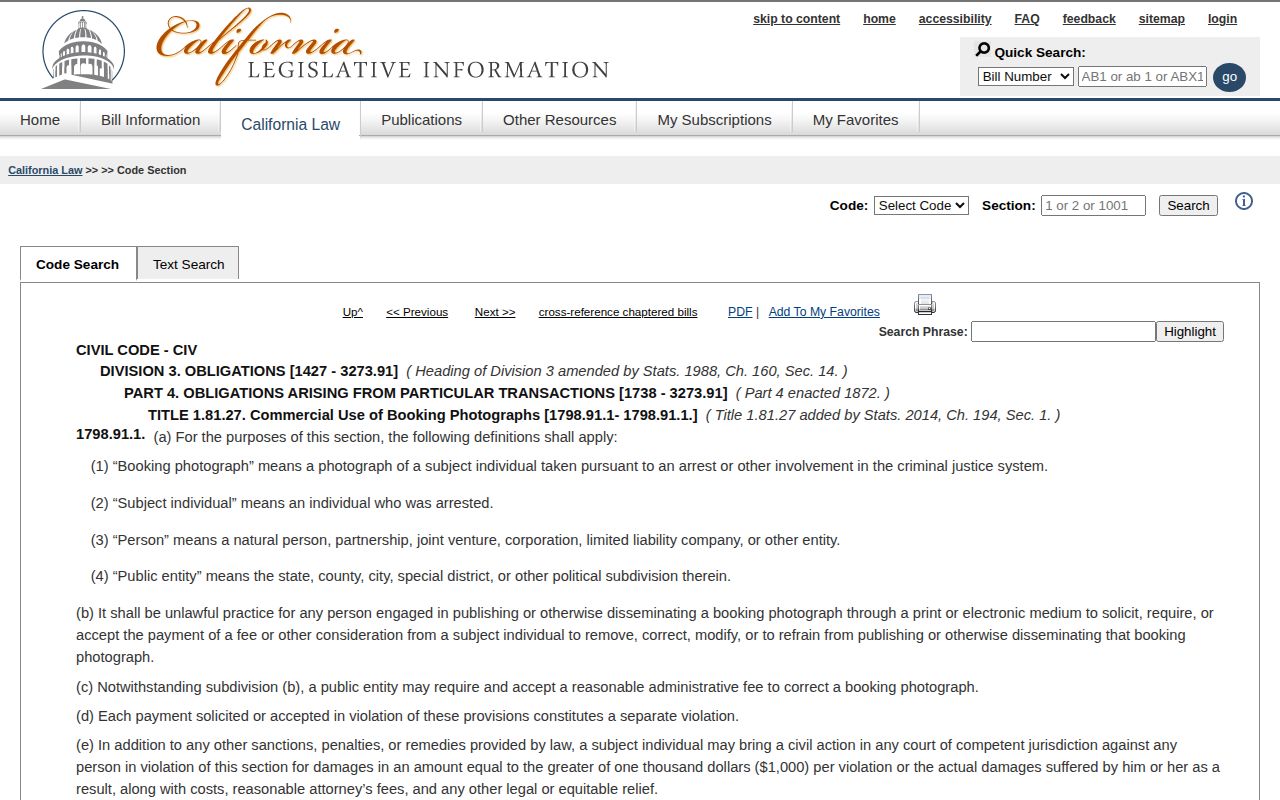
Civil Code §1798.91.1 targets one practice: the pay-to-remove scheme. Under the statute, a publisher may not solicit, require, or accept any fee or other consideration from the person pictured. The payment must be tied to removing, correcting, modifying, or not publishing a booking photo. Each prohibited payment counts separately. The law took effect January 1, 2015. A 2014 bill created it after sites posted booking photos and then demanded money from the people shown.
Publication itself is not banned. Nothing in the statute forces a sheriff to publish a photo or makes every booking image public. No universal deletion right exists once a case ends. The statute aims at the payment demand itself. A public agency may still charge a reasonable administrative fee to correct its own photo record. That is very different from a private publisher charging the subject for removal.
The private remedy can be steep. A claimant may recover the greater of $1,000 per violation or actual damages, plus costs and reasonable attorney fees. Courts can add other relief. Anyone weighing legal action should read the current statute and consult a qualified lawyer. A records page cannot judge a particular publisher's conduct.
The full text of Civil Code §1798.91.1 spells out the payment ban and the remedies.
Note: A free request can be available under a publisher’s policy, but a policy request is separate from a court order or official record relief.
California Booking Photo Release
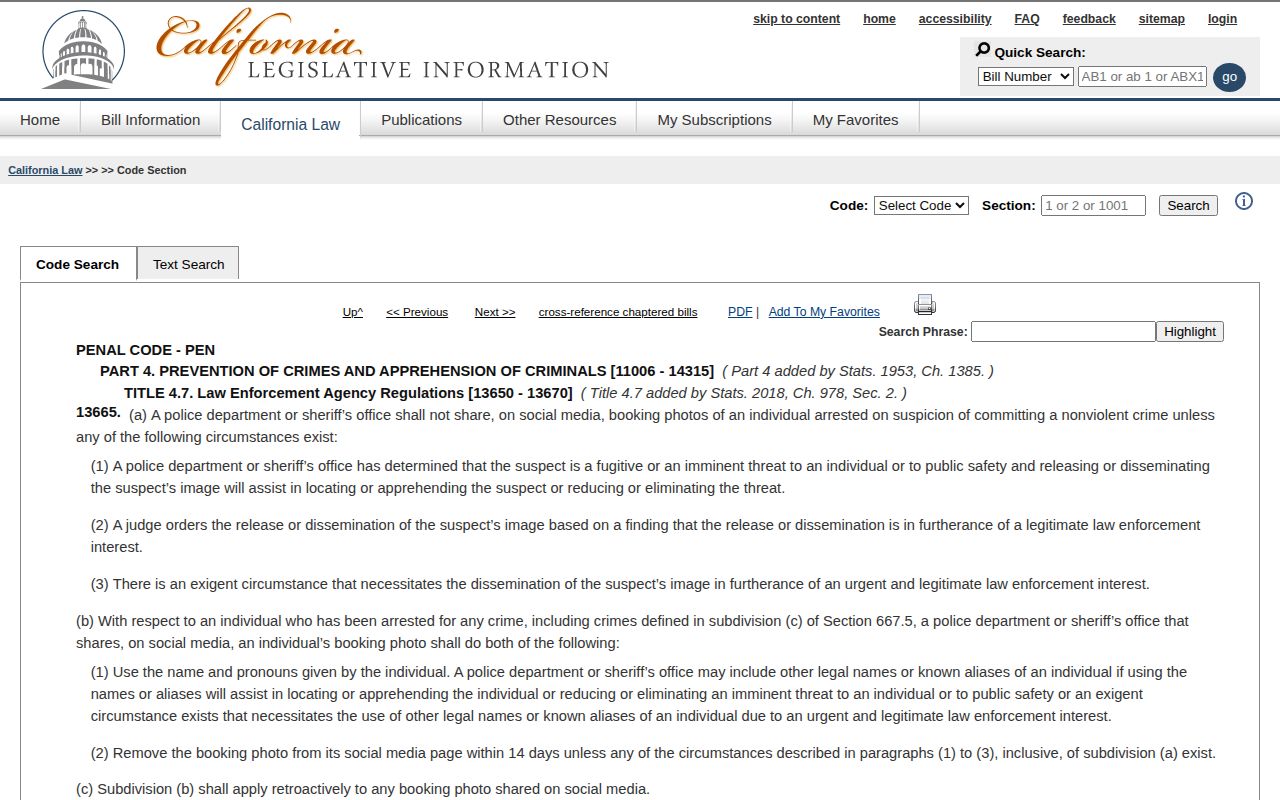
The California Public Records Act now lives in Government Code §§7920.000-7930.215. It opens a formal door to agency records. §7923.610 lists the arrest data agencies generally disclose. The required list covers identity and physical description. It also lists the date, time, and place of arrest and booking. Bail, release or holding status, charges, and outstanding warrants or holds are covered too. A booking photograph is not on the list. That omission matters. The Attorney General's 2003 opinion notes that "booking" can include the recording process and photographs. Even so, a sheriff keeps discretion over releasing the photo. The records law and exemptions are applied first. An agency can hand out the name, date, and charge while withholding the image. So "public arrest information" never means "every mugshot is public."
A smart request asks for the photo separately. It can also seek the nonexempt parts. The Attorney General's CPRA guide explains the full request process. Government Code §7922.535 gives the agency ten days for an initial determination. Unusual circumstances allow a written extension of up to fourteen more days. The deadline is for the decision only.
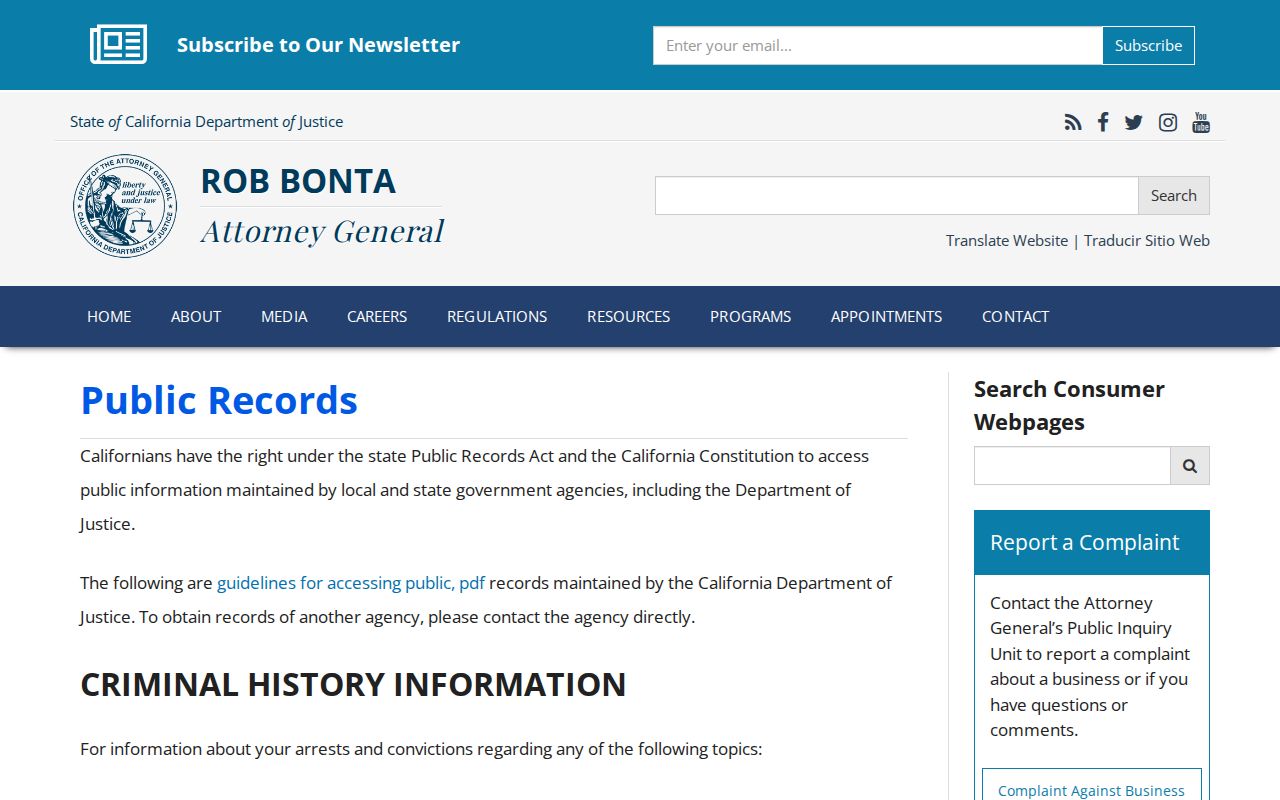
The Legislature's page for Penal Code §13665 covers the separate law restricting some law-enforcement social-media posts.
Name the person and the agency. Add a booking date or number if known. Then identify the specific record you want. Ask for segregable nonexempt material and a cited basis for any withholding. A roster entry for the arrest does not obligate the agency to release the photo. The statewide arrest-record page explains California booking paths and how county, court, and state-prison records differ.
The Attorney General's public-records guide lays out how an agency handles a request and reaches an access decision.
California Social Media Rules
Penal Code §13665 puts real limits on social media. A police or sheriff's department may not post a booking photo of someone arrested for a nonviolent offense unless a statutory condition applies. One exception covers a fugitive or an imminent threat, where the post would aid location or public safety. A judge's order counts as another. So does an urgent, legitimate enforcement need. Posts generally must come down within fourteen days. The exception continues while a qualifying need lasts.
The statute defines social media narrowly, leaving out an agency's own website or electronic system. No blanket ban reaches a jail portal, a CPRA production, a court exhibit, or a news story. The law targets the agency's use of social platforms. And a deleted post does not prove every copy was destroyed.
The Attorney General's 2024 legal alert adds background. It describes the policy concerns behind the rule, including the lasting harm of publicizing an arrest. The alert also reads "booking photograph" broadly. A station headshot or an image taken during or just after an arrest can qualify. Helpful as it is, the alert does not control; the statute does.
California Sealing and Relief
Penal Code §851.91 opens a path to arrest sealing. The arrest must not have ended in conviction. Qualifying endings include no charges filed, dismissal, diversion, acquittal, or a reversal without refiling. The statute carves out exceptions, including active cases, certain serious offenses, evasion of prosecution, and identity fraud. File the petition in the county where the case was filed or the arrest occurred, and serve it on the district attorney and the arresting agency.
Some relief happens without a petition. Section 851.93 runs an automatic monthly Department of Justice process for specified eligible arrests. It covers arrests with no proceedings after the applicable period, acquittals, and certain completed diversion matters. Exclusions and offense-specific timing still apply. This relief is not dismissal. The state summary may retain a relief notation even as the rules on access change.
Convictions travel other roads. Section 1203.4 offers relief after probation or other statutory conditions, and §1203.425 creates an automatic process for qualifying conviction records. Details depend on the offense and case history. None of these paths forces every newsroom, search engine, archive, or aggregator to drop an old image. Get the signed court order or disposition. Then ask each custodian what it can update.
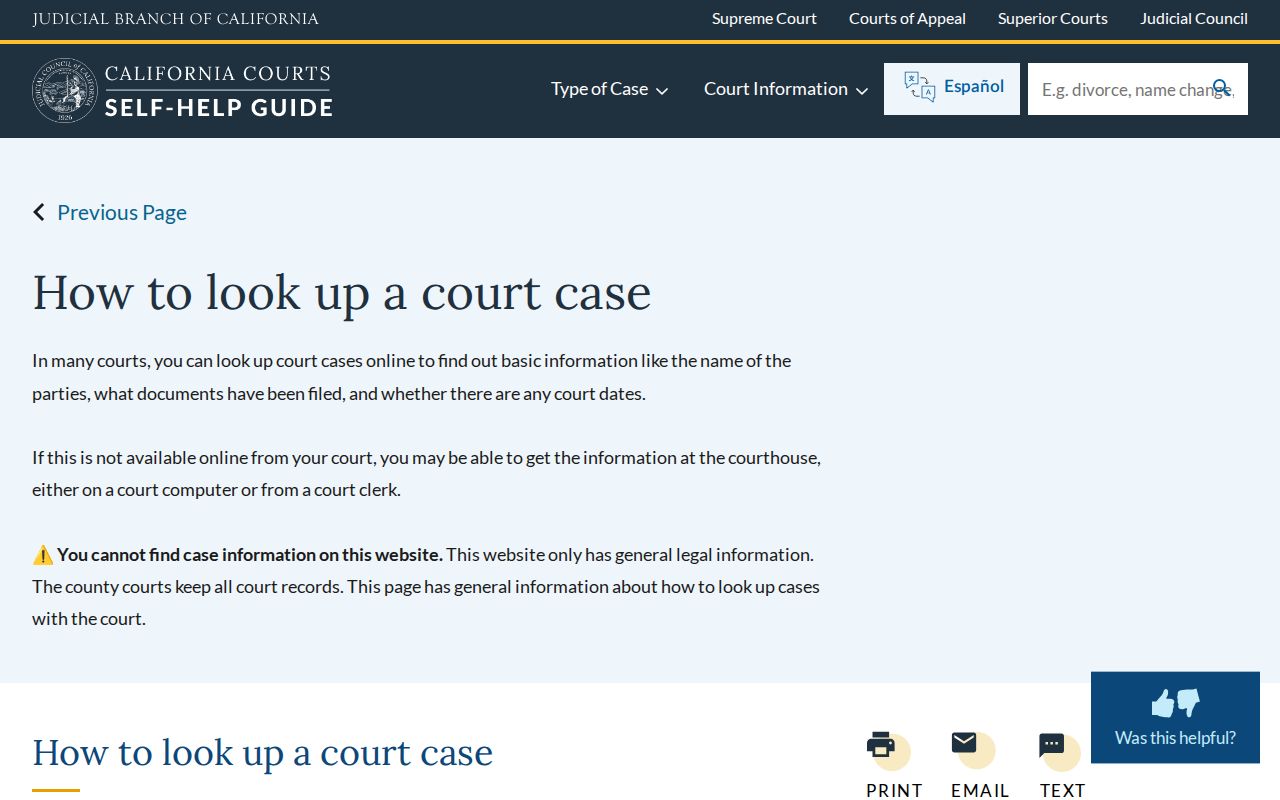
California Courts’ arrest-relief information covers qualifying paths when an arrest never ended in conviction.
Relief changes what an official office may disclose. An outside copy can still exist. Ask the arresting agency whether it still holds the photo and what its current retention or disclosure rule says. Send any correction to the actual source, since a court order does not automatically update every copied record.
Note: The court decides eligibility for relief, while each publisher handles its own copy under its stated policy and applicable law.
California Juvenile Photo Privacy
Juvenile records live in a separate legal world. Section 827.9 of the Welfare and Institutions Code makes specified juvenile police records confidential. Photos count too. Rule of Court 5.551 shields juvenile case files, digital images, and exhibits. California Courts states that delinquency and dependency records are not open to the general public.
CDCR adds its own rule. Its media policy requires a youth’s permission for any public photograph. No site should index juvenile images, scrape a youth case file, or treat a name match as proof of age; if a public page exposes a record by mistake, contact the custodian and do not republish the image.
Adult status is no green light. An adult record can be sealed. It may be withheld for safety or investigation reasons, or dropped from a short-lived roster. Agencies may also redact witness, victim, medical, or protected personal information while releasing other parts of a record.
California Publisher Correction Paths
A third-party mirror works by its own rules. It is not a public agency. Check its current free correction policy along with the official court or agency record. Its instructions can change, and a stated review period is no promise that a request gets accepted.
RecentlyBooked’s stated free policy covers requests for mistaken identity, juvenile records, duplicate entries, and specified case outcomes.
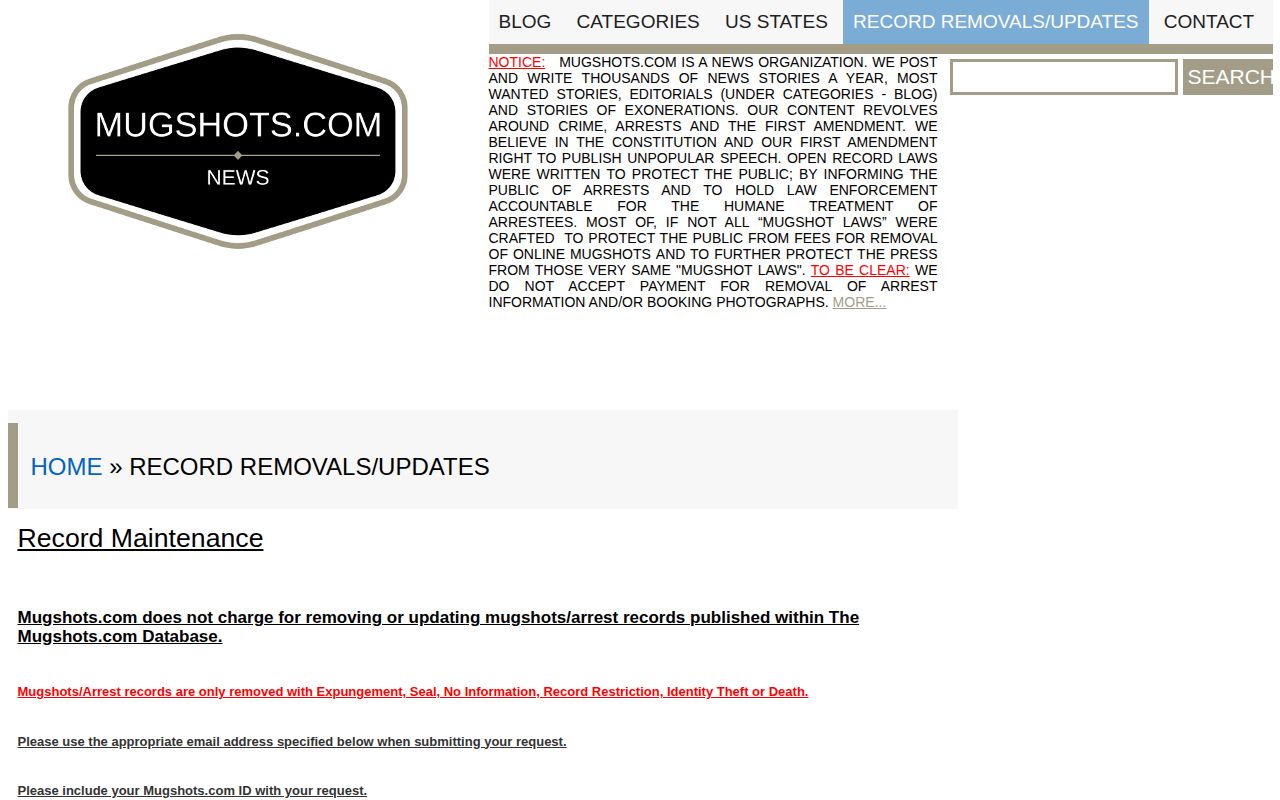
Busted Newspaper’s form describes a free documentation review. Verification may take five to ten days. Mugshots.com’s maintenance page handles free update or removal requests backed by court documents. It gives a processing estimate of up to ten business days, though these are the operators’ published terms, not guaranteed outcomes.
The Mugshots.com record-maintenance page says its requests do not carry a removal charge.
Mugshots.zone’s about page says it works to remove material that should be sealed or expunged. County forms may still ask for proof. They can also request identity details. Arrests.org’s California contact page publishes no detailed removal schedule. Contact an operator directly if a route exists, but treat no heading as a promise of a specific turnaround.
The Mugshots.zone about page is a general operator policy. It is not a California-wide guarantee. Ask at the source holding the copy. A search result or copied post may need its own separate request.
Newsrooms run on editorial review. There is no universal removal switch. A request can cite a dismissal, acquittal, sealing order, or mistaken identity, yet a newsroom may keep a truthful historical report and add context. Once the source truly changes, a search engine’s outdated-content form can affect a stale snippet, though it cannot alter the source itself.
Watch for bold promises. No one can erase every record. California law bars a publisher from conditioning removal or correction on payment from the person shown. Court relief, a free operator request, and a cached search result remain separate actions, and none guarantees total erasure.